Summary

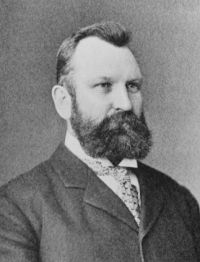
Portrait of William A. Keener William A. Keener Recovery of Money Paid Under Mistake of Fact (1887)

Hence, if the plaintiff has under mistake paid that which he could not have been compelled to pay either at law or in equity, but which is clearly a moral obligation, there is no unjust enrichment, and the plaintiff is not entitled to relief. “The rule has always been, that if a man has actually paid what the law would not have compelled him to pay, but what in equity and conscience he ought, he cannot recover it back again in an action for money had and received.”
Source: Wikisource

Portrait of William A. Keener William A. Keener Recovery of Money Paid Under Mistake of Fact (1887)

But in a jurisdiction where it is held that it is no defence to an action brought to recover money paid under mistake of fact, that the defendant’s position has been changed and substantial rights lost in consequence of the payment, it would seem to be highly inequitable to throw the loss brought about by plaintiff’s negligence on the defendant.
Assuming a defendant to be ignorant of plaintiff’s mistake, can an action be brought without a demand having first been made upon him?
Source: Wikisource

Portrait of William A. Keener William A. Keener Recovery of Money Paid Under Mistake of Fact (1887)

The rule ordinarily being that, where a demand is necessary, the Statute of Limitations does not run until demand is made, suppose the plaintiff learns of the mistake soon after the payment of the money to the defendant, is he to be allowed to prolong the defendant’s liability indefinitely by failing to make a demand? It would seem not. That which is required of a plaintiff out of regard for the defendant should not be used by the plaintiff to the defendant’s disadvantage, when, in denying his right so to use it, nothing inequitable is done.
Source: Wikisource

Get perspective with Kwize: daily news enlightened by great literature