Summary

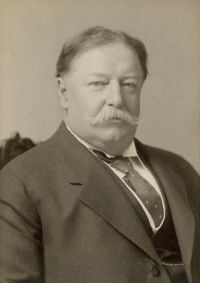
Portrait of William Howard Taft William Howard Taft City of Boston v. Jackson — Opinion of the Court

If the Constitution and laws of Massachusetts authorize the commonwealth to operate a railway company for the public benefit, there is nothing in the Fourteenth Amendment to prevent. Nor is there anything in it preventing the state from using the trustees as agents to operate the railway and in such operation to determine the needed expenditures to comply with the obligations of the lease or the requirements of adequate public service.
Source: Wikisource

Portrait of William Howard Taft William Howard Taft City of Boston v. Jackson — Opinion of the Court

The plaintiff in error comes to this court because, as it says, the statute of 1918 of the commonwealth, by which the trustees took over and are now operating the railway, impairs the obligation of the contract of lease of its property in the tunnels and subways to the railway company, and so violates the contract clause of the federal Constitution. It further contends that the imposition of a tax merely to aid a private corporation, as in the act of 1918 complained of, is not for a public purpose, and taxes collected therefor from it is taking its property without due process of law.
Source: Wikisource

Portrait of William Howard Taft William Howard Taft City of Boston v. Jackson — Opinion of the Court

If the commonwealth is called upon to make payments, to meet deficits or diminution of the reserve fund, such amounts are to be assessed upon the several cities and towns in which the railway operates, as an addition to the regular state tax, in proportion to the number of persons in said cities and towns using the service of the company at the time of the payments as determined by the trustees. The trustees are to fix the fares to meet the cost of service, including taxes, rentals and interest on the indebtedness of the company, fixed dividends on the preferred stock, and 5 per cent.
Source: Wikisource

Get perspective with Kwize: daily news enlightened by great literature