Summary

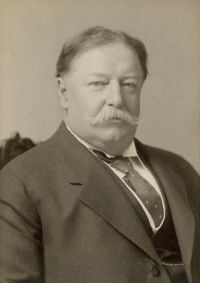
Portrait of William Howard Taft William Howard Taft John Thropp's Sons' Company v. Seiberling…

The workmen, however, found that they could work more rapidly and with less pains, if they gave up the saw-tooth stretch and depended only on the use of the spinning wheel, with which, by increasing the hand speed of the core, they could smooth the fabric against the core without wrinkles. The spinning or stitching of the sides by the rapid revolution of the core had been previously shown in the kindred art of shaping thin metal sheets over a power driven core.
Source: Wikisource

Portrait of William Howard Taft William Howard Taft John Thropp's Sons' Company v. Seiberling…

It is true that the spinning rolls in all these patents are steadied against the fabric in one way or another, as by the power-pressed radially moving support in the State patent; but in the end the hand is needed to complete the spinning process as it nears the bead edge. We do not think that the use of the springs by State in such a combination involves patentable invention, when we weigh its inconsiderable importance and note the suggestion of the use of such springs for analogous purposes in Vincent, and in Seiberling and Stevens.
Source: Wikisource

Portrait of William Howard Taft William Howard Taft John Thropp's Sons' Company v. Seiberling…

By thus doing what the foreman of the shops at first deprecated, the workmen developed a successful improvement in the hand making of tires. The spinning was usually done one side at a time; but powerful workmen were known to work the spinning wheels together on both sides of the core. The spinning of the fabric by rotating the core rapidly was more usual in tires of smaller sizes, because the fabric was so stiff that such a method by hand in larger tires was impracticable.
Source: Wikisource

Get perspective with Kwize: daily news enlightened by great literature