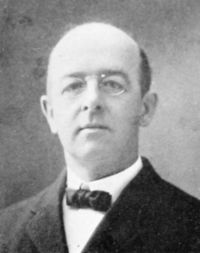
William John Hopkins

William John Hopkins

Summary

Portrait of William John Hopkins William John Hopkins The Sandman: His Farm Stories

And the wagons, going through, had made a track that led up past the kitchen door and past the shed and past the barn and past the orchard to the wheat-field; and through the wheat-field to the maple-sugar woods.
One day, when the winter was almost over and it was beginning to get warmer, Uncle John got out the old oxen. And they came out and put their heads down and he put the yoke over and the bows under, and he hooked the tongue of the sled to the yoke; for the snow was not all melted, and enough was on the ground for the sled to go on.
Source: Gutenberg

Portrait of William John Hopkins William John Hopkins The Sandman: His Farm Stories

If the bars were not put up again, the cows might get out; and if the oxen did not pass, on their return, all the familiar objects, how did they get back to the barn? It is the young critics that I hope to please, those whose years count no more than six. If they like these farm stories half as well as my own young critic likes them, I shall be satisfied.
Source: Gutenberg

Portrait of William John Hopkins William John Hopkins The Sandman: His Farm Stories

When a lot of cows are together, one of the cows is always the leader, and she always goes first, wherever they go. If any other cow tries to go first, the leader butts that one and makes her go behind. Or if the other cow doesn't want to go behind, they put their horns together and push, and the one that pushes harder is the leader.
So the cows waited at the gate, and little John had come down-stairs and Aunt Deborah had given him a piece of johnny-cake, because breakfast wasn't ready and little boys are always hungry.
Source: Gutenberg

Get perspective with Kwize: daily news enlightened by great literature