Summary

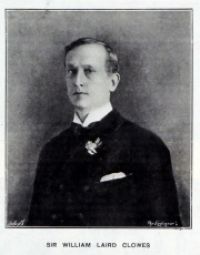
Portrait of William Laird Clowes William Laird Clowes The Royal Navy, a History from the Earliest Times to the Present (1897)

Any historian, no matter his good faith, may err, as well in his facts as in his conclusions; but if either Captain Mahan or Mr. Roosevelt err it will not, I promise both English and American readers, be on the score of national prejudice or personal insincerity. I only wish that the two countries could be induced to permanently co-operate in the making of history with as single an aim as we Britons and our American cousins are on this occasion endeavouring to write it.
Source: Wikisource

Portrait of William Laird Clowes William Laird Clowes The Royal Navy, a History from the Earliest Times to the Present (1897)

The story of their occasional pettinesses and errors is often quite as instructive as the record of their normally great and noble actions; and he would be but a poor and short-sighted lover of his country, or of his hero, who should seek to heighten the glory of an established fame by painting out its shadows. Neither Great Britain nor the United States has uniformly behaved like an angel: neither ever will behave in that manner.
Source: Wikisource

Portrait of William Laird Clowes William Laird Clowes The Royal Navy, a History from the Earliest Times to the Present (1897)

Not monarchs, not statesmen, not scientists, not reformers, not manufacturers, not even merchants or soldiers have contributed as much as the Navy has contributed towards the building up, the extension, and the preservation of the British Empire. But the nature and the working of this all-important force have been strangely neglected by the British historian, and more especially by the British student. The acts of our kings, our statesmen, our reformers, and our soldiers have been voluminously and exactly chronicled, so that he who runs may read.
Source: Wikisource

Get perspective with Kwize: daily news enlightened by great literature