Summary

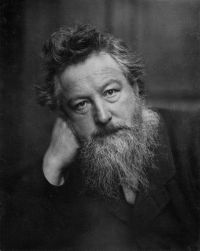
Portrait of William Morris William Morris The House of the Wolfings — CHAPTER III (1889)

Nor yet shall the Wolfing women hear words on the wind go by As they weave and spin the night down when the House is gone to the war, And weep for the swains they wedded and the children that they bore. Yea do my bidding, O Folk-wolf, lest a grief of the Gods should weigh On the ancient House of the Wolfings and my death o'ercloud its day."
And still she clung about him, while he spake no word of yea or nay: but at the last he let himself glide wholly into her arms, and the dwarf-wrought hauberk fell from his knees and lay on the grass.
Source: Wikisource

Portrait of William Morris William Morris The House of the Wolfings — CHAPTER III (1889)

O mighty man and joyous, art thou of the Wolfing kin? 'Twas no evil deed when we mingled, nor lieth doom therein. Thou lovely man, thou black-haired, thou shalt die and have done no ill. Fame-crowned are the deeds of thy doing, and the mouths of men they fill. Thou betterer of the Godfolk, enduring is thy fame: Yet as a painted image of a dream is thy dreaded name. Of an alien folk thou comest, that we twain might be one indeed. Thou shalt die one day.
Source: Wikisource

Portrait of William Morris William Morris The House of the Wolfings — CHAPTER III (1889)

Whenso folk need the fire, do they hew the apple-tree, And burn the Mother of Blossom and the fruit that is to be? Or me wilt thou bid to thy grave-mound because thy battle-wrath May nothing more be bridled than the whirl wind on his path? So hearken and do my bidding, for the hauberk shalt thou bear E'en when the other warriors cast off their battle-gear. So come thou, come unwounded from the war-field of the south, And sit with me in the beech-wood, and kiss me, eyes and mouth.
Source: Wikisource

Get perspective with Kwize: daily news enlightened by great literature