Summary

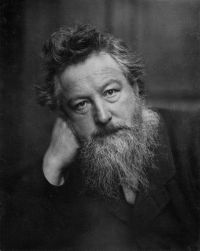
Portrait of William Morris William Morris The House of the Wolfings — CHAPTER XXVIII (1889)

In the twinkling of an eye the half-moon had lapped around the Roman-Goths and those that were with them; and the dastards made no stand but turned about at once, crying out that the Gods of the Kindreds were come to aid and none could withstand them. But these fleers thrust against the band of Romans who were next to them, and bore them aback, and great was the turmoil; and when Thiodolf's storm fell full upon them, as it failed not to do, so close were they driven together that scarce could any man raise his hand for a stroke.
Source: Wikisource

Portrait of William Morris William Morris The House of the Wolfings — CHAPTER XXVIII (1889)

Then turns Thiodolf round to those nighest to him and says, but still softly:
"Hear ye a word, O people, of the wisdom of the foe! Before us thick they gather, and unto the death they go. They fare as lads with their cur-dogs who have stopped a fox's earth, And standing round the spinny, now chuckle in their mirth, Till one puts by the leafage and trembling stands astare At the sight of the Wood wolf's father arising in his lair— They have come for our wives and our children, and our sword-edge shall they meet
Source: Wikisource

Portrait of William Morris William Morris The House of the Wolfings — CHAPTER XXVIII (1889)

Clad in gear that we gilded they shrink from our sword; In the House that we builded they sit at the board; Come, war-children, gather, come swarm o'er the wall For the feast of War-father to sweep out the Hall!"
Now amidst of their singing the sun rose upon the earth, and gleamed in the arms of men, and lit the faces of the singing warriors as they stood turned toward the east.
In this first onset of battle but twenty and three Markmen were slain in all, besides Arinbiorn; for, as aforesaid, they had the foe at a disadvantage. And this onset is called in the tale the Storm of Dawning.
Source: Wikisource

Get perspective with Kwize: daily news enlightened by great literature