Summary

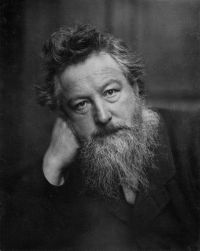
Portrait of William Morris William Morris The Story of the Volsungs — Translators' Preface

As to the literary quality of this work we might say much, but we think we may well trust the reader of poetic insight to break through whatever entanglement of strange manners or unused element may at first trouble him, and to meet the nature and beauty with which it is filled: we cannot doubt that such a reader will be intensely touched by finding, amidst all its wildness and remoteness, such a startling realism, such subtilty, such close sympathy with all the passions that may move himself to-day.
Source: Wikisource

Portrait of William Morris William Morris The Story of the Volsungs — Translators' Preface

Of Sigurd at Hlymdale, of Gudrun’s dream, the magic potion of Grimhild, the wedding of Sigurd consequent on that potion; of the wooing of Brynhild for Gunnar, her marriage to him, of the quarrel of the Queens, the brooding grief and wrath of Brynhild, and the interview of Sigurd with her—of all this, the most dramatic and best-considered part of the tale, there is now no more left that retains its metrical form than the few snatches preserved by the Sagaman, though many of the incidents are alluded to in other poems.
Source: Wikisource

Portrait of William Morris William Morris The Story of the Volsungs — Translators' Preface

From this point to the end of the Saga it keeps closely to the Songs of Edda; in chap. xxxii. the Sagaman has rendered into prose the Ancient Lay of Gudrun, except for the beginning, which gives again another account of the death of Sigurd: this lay also we have translated.
The grand poem, called the Hell-ride of Brynhild, is not represented directly by anything in the prose except that the Sagaman has supplied from it a link or two wanting in the Lay of Sigrdrifa; it will be found translated in our second part.
Source: Wikisource

Get perspective with Kwize: daily news enlightened by great literature