Summary

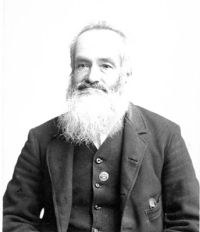
Portrait of William Muir William Muir,  The Caliphate: Its Rise, Decline and Fall…

“ By the faithful discharge of important trusts, Ziyad overcame the disadvantage of servile birth, rose to important office, and eventually was appointed by 'Ali to the government of Al-Basra and Istakhr. Powerful, wise, and eloquent, he was by far the ablest statesman of the day. Devoted to the cause of 'Ali, he was bitterly opposed to the pretensions of Mu'awiya, even after the abdication of Al-Hasan. ”
Source: Wikisource

Portrait of William Muir William Muir,  The Caliphate: Its Rise, Decline and Fall…

“ Through the constant wars with the Greeks, the Syrians were also superior in military affairs. These conquerors and conquered lived on friendly terms, sharing the same cities and towns and even churches; whereas, in Al-'Irak, Al-Kufa and Al-­Basra were two military colonies in the midst of a hostile 299
indigenous population. The Christians of Syria were at least as well off under Mu'awiya as they had been under Heraclius.
”
Source: Wikisource

Portrait of William Muir William Muir,  The Caliphate: Its Rise, Decline and Fall…

“ Mu'awiya was dissuaded from his design by the consideration urged upon him, that where the Prophet had placed his pulpit and his staff, there they should remain. And so they were left as relics in the Great Mosque hard by the last home of Mohammad.
Features of reign
Syria was, of course, the capital province of the Umeiyad Empire, as with Egypt, it was first in culture and social and political standing. The Arabs of the northern part were mostly Keisites, of the southern, Kelbites. Mu'awiya was more nearly related to the former, but he made the son of his Kelbite wife his heir
”
Source: Wikisource

Get perspective with Kwize: daily news enlightened by great literature