Summary

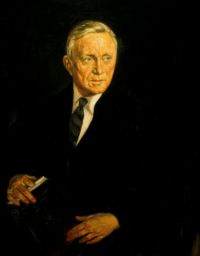
Portrait of William O. Douglas William O. Douglas Breithaupt v. Abram — Dissent

And if the decencies of a civilized state are the test, it is repulsive to me for the police to insert needles into an unconscious person in order to get the evidence necessary to convict him, whether they find the person unconscious, give him a pill which puts him to sleep, or use force to subdue him. The indignity to the individual is the same in one case as in the other, for in each is his body invaded and assaulted by the police who are supposed to be the citizen's protector.
Source: Wikisource

Portrait of William O. Douglas William O. Douglas Breithaupt v. Abram — Dissent

But the sanctity of the person is equally violated and his body assaulted where the prisoner is incapable of offering resistance as it would be if force were used to overcome his resistance. In both cases evidence is used to convict a man which has been obtained from him on an involuntary basis. I would not draw a line between the use of force on the one hand and trickery, subterfuge, or any police technique which takes advantage of the inability of the prisoner to resist on the other.
Source: Wikisource

Portrait of William O. Douglas William O. Douglas Breithaupt v. Abram — Dissent

If law enforcement were the chief value in our constitutional scheme, then due process would shrivel and become of little value in protecting the rights of the citizen. But those who fashioned the Constitution put certain rights out of the reach of the police and preferred other rights over law enforcement.
One source of protection of the citizen against state action is the Due Process Clause of the Fourteenth Amendment. Our decisions hold that the police violate due process when they use brutal methods to obtain evidence against a man and use it to convict him.
Source: Wikisource

Get perspective with Kwize: daily news enlightened by great literature