Summary

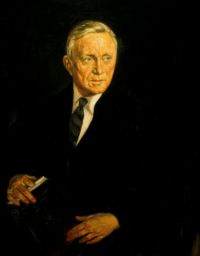
Portrait of William O. Douglas William O. Douglas Chessman v. Teets (354 U.S. 156…

We meddle mischievously with the law when we issue the writ today. We do not act to remedy any injustice that has been demonstrated. When the whole history of the case is considered, we seize upon a technicality to undo what has been repeatedly sustained both by the California Supreme Court and by this Court. I would guard the ancient writ jealously, using it only to prevent a gross miscarriage of justice.
Before his appeal was heard by the California Supreme Court, Chessman moved in that court for orders augmenting and correcting the record, and for a dismissal of his automatic appeal.
Source: Wikisource

Portrait of William O. Douglas William O. Douglas Chessman v. Teets (354 U.S. 156…

We should respect a man's constitutional right whenever or however it is presented to us. My difficulty here is not with any principle the Court announces. My dissent is based on the conviction that, in substance, the requirements of due process have been fully satisfied, that to require more is to exalt a technicality.
To say that the settlement in this case was ex parte is to be technically accurate. But it is not to state the whole story. Chessman was not present in court when the record was settled.
Source: Wikisource

Portrait of William O. Douglas William O. Douglas Chessman v. Teets (354 U.S. 156…

To repeat, this is not a case of a helpless man who was given no opportunity to participate in the settlement of the record. He did participate in a real, vivid sense of the term. A lawyer who entered the case by appointment at this late stage would be utterly helpless, for he would have no idea what went on at the trial. When it came to the settlement of the record, California did all that reasonably could be required by sending the reconstructed record to Chessman for criticism.
Source: Wikisource

Get perspective with Kwize: daily news enlightened by great literature