Summary

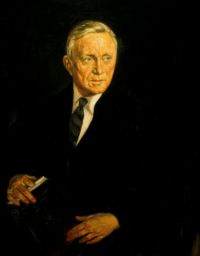
Portrait of William O. Douglas William O. Douglas Citizen Publishing Company v. United States…

Surely a command that the government itself shall not impede the free flow of ideas does not afford nongovernmental combinations a refuge if they impose restraints upon that co stitutionally guaranteed freedom. Freedom to publish means freedom for all and not for some. Freedom to publish is guaranteed by the Constitution, but freedom to combine to keep others from publishing is not. Freedom of the press from governmental interference under the First Amendment does not sanction repression of that freedom by private interests.
Source: Wikisource

Portrait of William O. Douglas William O. Douglas Citizen Publishing Company v. United States…

At the end of the trial the District Court found that the joint operating agreement in purpose and effect monopolized the only newspaper business in Tucson in violation of § 2 of the Sherman Act.
As respects the Clayton Act charge the District Court found that in Prima County, the appropriate geographic market, the Citizen's acquisition of the Star stock had the effect of continuing in a more permanent form a substantial lessening of competition in daily newspaper publishing that is condemned by § 7.
Source: Wikisource

Portrait of William O. Douglas William O. Douglas Citizen Publishing Company v. United States…

The prospects of reorganization of the Citizen in 1940 would have had to be dim or nonexistent to make the failing company doctrine applicable to this case.
The burden of proving that the conditions of the failing company doctrine [4] have been satisfied is on those who seek refuge under it. That burden has not been satisfied in this case.
We confine the failing company doctrine to its present narrow scope.
The restraints imposed by these private arrangements have no support from the First Amendment as Associated Press v.
Source: Wikisource

Get perspective with Kwize: daily news enlightened by great literature