Summary

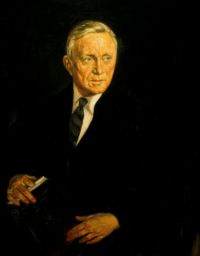
Portrait of William O. Douglas William O. Douglas Clearfield Trust C v. United States…

The application of state law, even without the conflict of laws rules of the forum, would subject the rights and duties of the United States to exceptional uncertainty. It would lead to great diversity in results by making identical transactions subject to the vagaries of the laws of the several states. The desirability of a uniform rule is plain.
Source: Wikisource

Portrait of William O. Douglas William O. Douglas Clearfield Trust C v. United States…

But whatever theory is taken, we adhere to the conclusion of the National Exchange Bank case that the drawee's right to recover accrues when the payment is made. There is no other barrier to the maintenance of the cause of action. The theory of the drawee's responsibility where the drawer's signature is forged (Price v. Neale, 3 Burr. 1354; United States v. Chase Nat. Bank, 252 U.S. 485, 40 S.Ct. 361, 64 L.Ed. 675, 10 A.L.R. 1401) is inapplicable here. The drawee, whether it be the United States or another, is not chargeable with the knowledge of the signature of the payee.
Source: Wikisource

Get perspective with Kwize: daily news enlightened by great literature