Summary

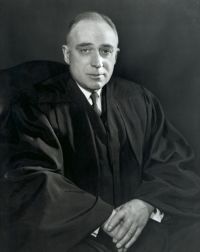
Portrait of John Marshall Harlan II John Marshall Harlan II Gilbert v. United States — Opinion of the Court

We cannot so easily dispose of the case. For accepting the premise that the jury could have found that petitioner did not purport to act in a representative capacity when he endorsed the checks, it was surely also permissible for the jury to find that petitioner had purported to make an agency endorsement in both instances, and we are thus left to speculate on which theory its verdict in fact rested.
Source: Wikisource

Portrait of John Marshall Harlan II John Marshall Harlan II Gilbert v. United States — Opinion of the Court

We find no more persuasive than did the Court of Appeals in Selvidge (290 F.2d, at 896 and note 2) the scattered federal cases relied on by the Government in support of the opposite view. [11] Nor are we impressed with the argument that 'forge' in § 495 should be given a broader scope than its common-law meaning because contained in a statute aimed at protecting the Government against fraud. [12] Other federal statutes are ample enough to protect the Government against fraud and false statements.
Source: Wikisource

Portrait of John Marshall Harlan II John Marshall Harlan II Gilbert v. United States — Opinion of the Court

Hawkins, [8] and Blackstone, [9] who are also cited by the Government, are no more persuasive towards the Government's view. The more inclusive definition of forgery contained in the English statutes, supra, 370 U.S., p. 655, 82 S.Ct., p. 1402 and note 7, proves not that Regina v. White was mistaken in its view of the common law but only that a broader definition was deemed desirable by Parliament. And finally, the Regina v. White view of forgery at common law was early accepted in a federal case as representing the English common law.
Source: Wikisource

Get perspective with Kwize: daily news enlightened by great literature