Summary

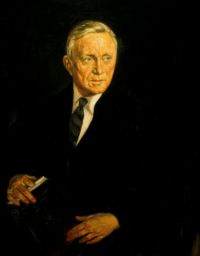
Portrait of William O. Douglas William O. Douglas Moore v. Mead's Fine Bread Company…

No instrumentality of interstate commerce would be used to destroy the local merchant and expand the domain of the combine. But the opportunities afforded by interstate commerce would be employed to injure local trade. Congress, as guardian of the Commerce Clause, certainly has power to say that those advantages shall not attach to the privilege of doing an interstate business.
This type of price cutting was held to be 'foreign to any legitimate commercial competition' even prior to the Robinson-Patman Act.
Source: Wikisource

Portrait of William O. Douglas William O. Douglas Moore v. Mead's Fine Bread Company…

The Court of Appeals reversed the judgment for petitioner on the ground that the injury resulting from the price cutting was to a purely local competitor whose business was in no way related to interstate commerce. 'If competition was lessened or a monopoly created,' said the Court of Appeals, 'it was purely local in its scope and effect and in no way related to or affected interstate commerce.' 208 F.2d 777, 780.
Source: Wikisource

Portrait of William O. Douglas William O. Douglas Moore v. Mead's Fine Bread Company…

If this method of competition were approved, the pattern for growth of monopoly would be simple. As long as the price warfare was strictly intrastate, interstate business could grow and expand with impunity at the expense of local merchants. The competitive advantage would then be with the interstate combines, not by reason of their skills or efficiency but because of their strength and ability to wage price wars. The profits made in interstate activities would underwrite the losses of local price-cutting campaigns.
Source: Wikisource

Get perspective with Kwize: daily news enlightened by great literature