Summary

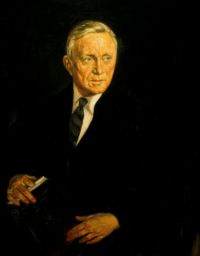
Portrait of William O. Douglas William O. Douglas Debacker v. Brainard — Dissent

The natural parent needs no process to temporarily deprive his child of its liberty by confining it in his own home, to save it and to shield it from the consequences of persistence in a career of waywardness, nor is the state, when compelled, as parens patriae, to take the place of the father for the same purpose, required to adopt any process as a means of placing its hands upon the child to lead it into one of its courts. When the child gets there and the court with the power to save it, determines on its salvation, and not its punishment, it is immaterial how it got there.
Source: Wikisource

Portrait of William O. Douglas William O. Douglas Debacker v. Brainard — Dissent

Whether a jury trial is in conflict with the juvenile court's underlying philosophy is irrelevant, for the Constitution is the Supreme Law of the land.
Given the fundamental nature of the right to jury trial as expressed in Duncan and Bloom, there is, as I see it, no constitutionally sufficient reason to deprive the juvenile of this right. The balancing of the rehabilitative purpose of the juvenile proceeding with the due process requirement of a jury trial is a matter for a future Constitutional Convention.
Source: Wikisource

Portrait of William O. Douglas William O. Douglas Debacker v. Brainard — Dissent

Second, such experts as we had, notably the psychiatrists and analysts, were drawn away by the handsome fees they could receive for rehabilitating the rich. Third, the love and tenderness alone, possessed by the white-coated judge and attendants, were not sufficient to untangle the web of subconscious influences that possessed the troubled youngster. Fourth, correctional institutions designed to care for these delinquents often became miniature prisons with many of the same vicious aspects as the adult models.
Source: Wikisource

Get perspective with Kwize: daily news enlightened by great literature