Summary

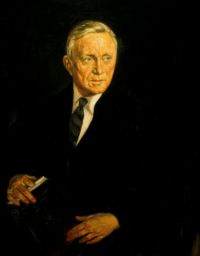
Portrait of William O. Douglas William O. Douglas Gardner v. California — Opinion of the Court

Since our system is an adversary one, a petitioner carries the burden of convincing the appellate court that the hearing before the lower court was either inadequate or that the legal conclusions from the facts deduced were erroneous. A transcript is therefore the obvious starting point for those who try to make out a case for a second hearing. The State can hardly contend that a transcript is irrelevant to the second hearing, where it specifically provides one, upon request, to the appellate court and the State attorney.
Source: Wikisource

Portrait of William O. Douglas William O. Douglas Gardner v. California — Opinion of the Court

Under California law, while the State has an appeal from an order discharging a prisoner in a habeas corpus proceeding, [1] the prisoner has no appeal where his petition is denied. See Loustalot v. Superior Court, 30 Cal.2d 905, 913, 186 P.2d 673, 677-678. But he may file a petition for habeas corpus either in the intermediate Court of Appeal or in the Supreme Court. [2] As petitioner in the instant case desired to pursue his remedy in the higher courts, he asked for a free transcript of the evidentiary hearing before the Superior Court.
Source: Wikisource

Get perspective with Kwize: daily news enlightened by great literature