“ Thus the Haves and the Have-nots, the opulent and the indigent, stand at the two extremes of the social scale, and a wide gulf is fixed between them.Among rude and savage people, the condition of poverty is uniform. Provided the bare appetites are satisfied, suffering is scarcely felt. Where slavery exists, indigence is little known; for it is the master's interest to keep the slave in a condition fit for labour, and the employer generally takes care to supply the animal wants of the employed. ”
Indigent
Definition and stakes
The theme of “indigent” has been addressed by authors such as Arthur Goldberg, Oliver Goldsmith, Harriet Martineau, Samuel Smiles and James David O'Neill. It is often associated with terms like indigenous, peoples, Americas, people and poverty.
Quotes about “indigent”
 Harriet Martineau,
Illustrations of political economy…
(1834)
Harriet Martineau,
Illustrations of political economy…
(1834)
“ Since indigence occasions misery, and disposes to vice, the welfare of society requires the greatest possible reduction of the number of the indigent.Charity, public and private, or an arbitrary distribution of the subsistence-fund, has hitherto failed to effect this object; the proportion of the indigent to the rest of the population having increased from age to age. ”
James David O'Neill, Catholic Encyclopedia (1913)
“ Where the necessaries of life are wanting, or where imminent peril threatens vital interests, indigence is extreme. Where the absence of aid leads to serious reverses, in goods or fortune, indigence is serious or pressing. Where the quest for the necessaries of life involves considerable trouble, indigence is common or ordinary. The obligation of almsgiving extends to this triple indigence. Scripture and the Fathers speak indiscriminately of the poor, the needy, and the indigent without restricting the obligation of almsgiving to any particular species of indigence. ”
 José Rizal,
The Indolence of the Filipino
José Rizal,
The Indolence of the Filipino
“ Which is indolent, the native coadjutor, poorly paid and badly treated, who has to visit all the indigent sick living in the country, or the friar curate who gets fabulously rich, goes about in a carriage, eats and drinks well, and does not put himself to any trouble without collecting excessive fees? ”
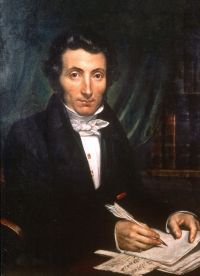 René Caillié,
Travels through Central Africa to Timbuctoo and across the Great Desert to Morocco performed in the year 1824-1828…
(1830)
René Caillié,
Travels through Central Africa to Timbuctoo and across the Great Desert to Morocco performed in the year 1824-1828…
(1830)
“ I said to myself, if they behave thus to their own countrymen, what would they not do to a stranger, a christian, without protection, in a country where no laws shield the indigent, and where the very circumstance of their being poor seems to expose them to greater persecution? ”
 Samuel Johnson,
A Journey to the Western Islands of Scotland
(1775)
Samuel Johnson,
A Journey to the Western Islands of Scotland
(1775)
“ Nor are they only the lowest and most indigent; many men of considerable wealth have taken with them their train of labourers and dependants; and if they continue the feudal scheme of polity, may establish new clans in the other hemisphere. ”
 Arthur Goldberg,
Draper v. Washington — Opinion of the Court
Arthur Goldberg,
Draper v. Washington — Opinion of the Court
“ An indigent defendant wishing to appeal and needing a transcript to do so may only obtain it if the judge who has presided at his trial and has already overruled his motion for a new trial as well as his objections to evidence and to conduct of the trial finds that these contentions, upon which he has already ruled, are not frivolous. ”
Oliver Goldsmith, Dalziels' Illustrated Goldsmith
“ I do not know whether such flouncing and shredding is becoming even in the rich, if we consider, upon a moderate calculation, that the nakedness of the indigent world may be clothed from the trimmings of the vain." ”
Arthur Goldberg,
Draper v. Washington — Opinion of the Court
“ It should be noted, however, that the State Supreme Court did, notwithstanding its comments, consider petitioners' assignments of error.↑ The State also argues that in practical effect there is no difference at all between the rights it affords indigents and nonindigents, because a moneyed defendant, motivated by a 'sense of thrift,' will choose not to appeal in exactly the same circumstances that an indigent will be denied a transcript. ”
 Anthony Kennedy,
Mallard v. United States District Court for Southern District of Iowa…
Anthony Kennedy,
Mallard v. United States District Court for Southern District of Iowa…
“ In my opinion his admission to practice implicitly included an obligation to participate in that program. [7] When a court has established a fair and detailed procedure for the assignment of counsel to indigent litigants, a formal request to a lawyer by the court pursuant to that procedure is tantamount to a command.In context, I would therefore construe the word "request" in § 1915 (d) as meaning "respectfully command." If that is not what Congress intended, the statute is virtually meaningless. ”
 Charles Evans Whittaker,
McNeal v. Culver — Opinion of the Court
Charles Evans Whittaker,
McNeal v. Culver — Opinion of the Court
“ Nearly 19 years ago the Court held in Betts v. Brady, 316 U.S. 455, 62 S.Ct. 1252, 86 L.Ed. 1595, that a state court in a criminal case need not appoint counsel to represent an indigent defendant, unless the failure to furnish counsel results in a conviction lacking in 'fundamental fairness.' Id., 316 U.S. 473, 62 S.Ct. 1261. That decision was by a divided Court; and six Justices now sit on the Court who had no hand in fashioning the rule. ”
 Stewart Edward White,
Conjuror's House: A Romance of the Free Forest
Stewart Edward White,
Conjuror's House: A Romance of the Free Forest
“ Your work here among the Indians is rot, and every sensible man knows it. You coop them up in your log-built houses, you force on them clothes to which they are unaccustomed until they die of consumption. Under your little tin-steepled imitation of civilization, for which they are not fitted, they learn to beg, to steal, to lie. ”
Jacob Dunham, Journal of Voyages
“ If I trust an Indian goods, he belonging to another town or settlement, and he neglects to pay me, and I find another Indian belonging to the same town, having tortoise-shell or other produce in his canoe, I can take it away from him for the debt, and he must look to the man who was indebted to me, for remuneration. ”
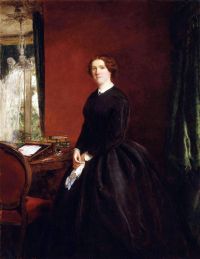 M. E. Braddon,
The Venetians
(1893)
M. E. Braddon,
The Venetians
(1893)
“ Most people hide their indigence as if it were an ugly sore, or if they speak of it, speak softly, apologetically, or with an assumed lightness, as if their poverty were not really poverty, but only a genteel limitation of means, implying none of the shortcomings of actual want. ”
 Millicent Todd Bingham,
Peru: a land of contrast
(1914)
Millicent Todd Bingham,
Peru: a land of contrast
(1914)
“ The poverty of the present-day Indians contrasts with lavish nature, “beggars sitting on a pile of gold.” Contrasts of nature, of people to country, of antiquity to the present—these diverse elements are insistent wherever one turns. ”
A. J. Duffield, Peru in the Guano Age
“ We have destroyed with our evil example people so well governed as these, who were so far from being inclined to wrongdoing or excess of any sort—both men and women—that an Indian with a hundred thousand dollars in gold and silver in his house, would leave it open, or would place a broom, or small stick across the threshold to signify that the owner was not within, and with that, as was their custom, no one would enter, nor take thence a single thing. ”
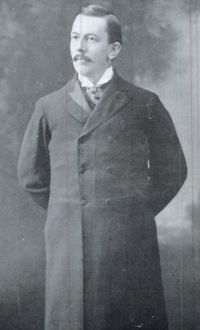 Warren King Moorehead,
The American Indian in the United States…
Warren King Moorehead,
The American Indian in the United States…
“ Being human, he refused to develop his property, if by so doing he merely fattened the pocketbook of some covetous white man. His vast tribal estates furnished him with moneys at stated occasions, and, relying too much upon these, he drifted into indolent habits. ”
Millicent Todd Bingham,
Peru: a land of contrast
(1914)
“ But in the midst of luxuriant plenty, like the Indian above the mine, poverty-struck for want of the very riches he sits upon, he is merely dying out for lack of everything with which he is surrounded. ”
Anna C. Johnson, The Iroquois; or, the bright side of Indian character (1855)
“ Thus do we often find the Indians on our frontiers to be mere wrecks and remnants of once powerful tribes, who have lingered in the vicinity of settlements, and sunk into precarious and vagabond existence. Poverty, repining and hopeless poverty, a canker of the mind before unknown to them, corrodes their spirits, and blights every free and noble quality of their natures. ”
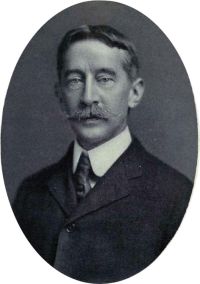 George Bird Grinnell,
Beyond the Old Frontier: Adventures of Indian-Fighters…
George Bird Grinnell,
Beyond the Old Frontier: Adventures of Indian-Fighters…
“ I was then like a bourgeois, rich and happy: no bourgeois had better-dressed wives than I; no Indian chief finer horses; no white man better-harnessed or swifter dogs. I beat all Indians at the race, and no white man ever passed me in the chase. ”
William Augustus Miles, The Letters of Gracchus on the East India Question
“ That the poverty of a large majority of the native subjects of our Indian Empire is such, as to disable them from acquiring our manufactures, is certainly true; but it is no less true, that a very considerable portion of that population possess the means of indulging in every article of convenience and luxury, both native and European. It has [Pg 70] been very generally stated, that there are only two classes of people in India, the very rich and the very poor. ”
Robert MacMicking, Recollections of Manilla and the Philippines
“ Should a poor Indian, the possessor of a patch of paddy-land capable of producing very little more than is required to feed his family, once run short of seed, he has a very hard battle to fight with the soil before he is able to get that debt cleared off, should his neighbours be too poor to assist him, as he must then have recourse to the usurer. ”
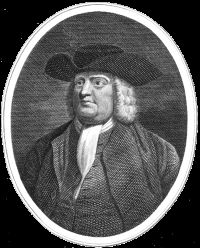 William Penn,
Concessions to the Province of Pennsylvania
(1681)
William Penn,
Concessions to the Province of Pennsylvania
(1681)
“ XII. And forasmuch, as it is usual with the planters to over-reach the poor natives of the country, in trade, by goods not being good of the kind, or debased with mixtures, with which they are sensibly aggrieved, it is agreed, whatever is sold to the Indians, in consideration of their furs, shall be sold in the market place, and there suffer the test, whether good or bad; if good, to pass; if not good, not to be sold for good, that the natives may not be abused, nor provoked. ”
John Lord, Beacon Lights of History, Volume 06…
“ It was the stain of the seventeenth and eighteenth centuries. Not merely slaves, but the slave-trade, increase the horrors of the frightful picture. America became associated, in the minds of Europeans, with gold-hunting, slavery, and cruelty to Indians. ”
Ulrich Bonnell Phillips, American Negro Slavery
“ They cannot, like the native proprietor, sit waiting half an hour for the second course, or see everything done in the worst possible manner, their rooms dirty, their property wasted, their plans frustrated, their infants slighted,—themselves deluded by artifices—they cannot, like the native proprietor, endure all this unruffled. ”
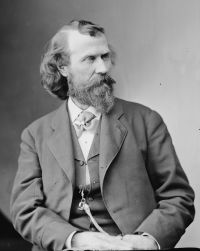 Cincinnatus Heine Miller,
Life Amongst the Modocs: Unwritten History
(1873)
Cincinnatus Heine Miller,
Life Amongst the Modocs: Unwritten History
(1873)
“ The Indian has no desire for fortune ; he has no wish in his wild state to accumulate wealth ; and it is in his wild state that he must be judged, for it is in that condition that he is said to sin. If u money is the root of all evil," as Solomon hath it, then the Indian has not that evil, or that root of evil, or any desire for it. ”
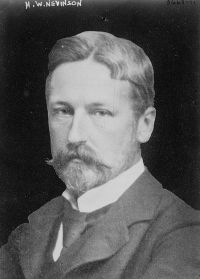 Henry Woodd Nevinson,
The new spirit in India
(1908)
Henry Woodd Nevinson,
The new spirit in India
(1908)
“ Our indifference to the Indian peoples, from whom we are continually sucking so much of our wealth, is universal and invariable. Or it is varied only at long intervals after outbreaks of bloodshed and threatenings of revolt. ”
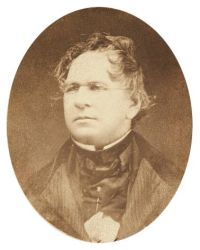 Henry Rowe Schoolcraft,
The Indian in his Wigwam; Or, Characteristics of the Red Race of America
Henry Rowe Schoolcraft,
The Indian in his Wigwam; Or, Characteristics of the Red Race of America
“ If wealth was accumulated, it is not intended to infer that the pressing wants of the Indians were not relieved—that the trade was not a very acceptable and important one to them, and that great peril and expense were not encountered, and a high degree of enterprise displayed in its prosecution. ”
 Irving Howbert,
The Indians of the Pike's Peak Region
Irving Howbert,
The Indians of the Pike's Peak Region
“ Would men leave high wages, mount and equip themselves at enormous expense, as some patriotically did, for the poor chance of capturing property, as a mere speculation, from the prowling bands of Indians that infested the settlements and were murdering their families? ”
 Richard Chenevix Trench,
On the Study of Words
Richard Chenevix Trench,
On the Study of Words
“ For indeed the strange wealth and the strange poverty, I know not which the strangest and the saddest, of the languages of savage tribes, rich in words which proclaim their shame, poor in those which should attest the workings of any nobler life among them, not seldom absolutely destitute of these last, are a mournful and ever- recurring surprise, even to those who were more or less prepared to expect nothing else. ”
Asenath Nicholson, Annals of the Famine in Ireland in 1847… (1851)
“ But the poor, who had not yet slid down the precipice so far as to feel that they were actually dying, could be heard on the streets, and in the market-place, interrogate one another, "And have ye seen the yaller Indian, God save us awl? ”
Emma Helen Blair, The Philippine Islands, 1493-1803 (1903)
“ Likewise I learned that an encomendero―because a chief had neither gold nor silver nor cloth with which to pay the tribute―exacted from him an Indian for nine pesos, in payment of nine tributes which he owed; and then took this Indian to the ship and sold him for thirty-five pesos. And although I told this to the steward and asked for the Indian, he remained in slavery. They collect tribute from children, old men, and slaves, and many remain unmarried because of the tribute, while others kill their children. ”
 E. Pauline Johnson,
Legends of Vancouver
E. Pauline Johnson,
Legends of Vancouver
“ That the Indian looks upon greed of gain, miserliness, avariciousness and wealth accumulated above the head of his poorer neighbor as one of the lowest degradations he can fall to, is perhaps more aptly illustrated in this legend than anything I could quote to demonstrate his horror of what he calls "the white man's unkindness." ”
 G. A. Henty,
The Treasure of the Incas: A Story of Adventure in Peru
G. A. Henty,
The Treasure of the Incas: A Story of Adventure in Peru
“ Well, there are thousands of your countrymen in the deepest poverty, Dias; you could secretly help those in distress; a single ingot, ten pounds in weight, would be a fortune to them. And when you die you might get a respectable lawyer to make out a will, leaving your treasure to some charity for the benefit of Indians, giving, of course, instructions where the treasure is to be found. ”
 Maria Edgeworth,
Tales and Novels — Volume 06
Maria Edgeworth,
Tales and Novels — Volume 06
“ Subsistence! Lord bless me, what a word! fitter for a pauper than a nobleman—subsistence! Then, if you are going to look after your father’s property, I hope you will make the agents do their duty, and send us remittances. ”
Mrs. Lanaghan, Antigua and the Antiguans, Volume 2…
“ Having thus passed through the early stages of life, the males followed mercantile or agricultural pursuits; and as, perhaps, wealth poured in upon them, and they felt in their own bosoms their superiority to many of the white inhabitants, their eyes became more and more opened, and they more and more felt their degraded state. ”
The Philippine Islands, 1493-1898…
“ With these moneys great good has been done for the poor Indians—now redeeming captives from those who carry them away to sell them among the Moros and other infidels, where they lose the faith; again, aiding them in their sickness, and famines, and the like. Indeed, I am unable to comprehend the consciences of men who would attempt to take this money from the poor Indians, and put an end to so good works. May God grant His light to us all. ”
Mohandas K. Gandhi, The Collected Works of Mahatma Gandhi
“ The frugal Indian, imported because of his power to assist the Colonist in working his country at a profit, has established himself as a dangerous trade competitor, has himself developed into a settler and a producer, and threatens to oust his old employer from the market. ”
Various, The Southern Literary Messenger…
“ A few years more, and the Indian again disappeared, and the white man stood in his place—and the green grass grew, and the corn-blade rustled, and the farm house was seen, where once stood the rude villages, in which the chieftains had told the tale of the white man's fraud, and of their own and their father's wrong, and their own and their father's valor. ”
 Hazard Stevens,
The Life of Isaac Ingalls Stevens…
Hazard Stevens,
The Life of Isaac Ingalls Stevens…
“ In an unhappy hour he opened a store and went to trading with the Indians. In their experience a trader was the personification of greed and falsehood. To them the union of the trader, all selfishness and fraud, and the preacher of morality and truth was monstrous, nay, impossible. ”
 John Taylor of Caroline,
An Inquiry into the Principles and Policy of the Government of the United States
(1814)
John Taylor of Caroline,
An Inquiry into the Principles and Policy of the Government of the United States
(1814)
“ And as Indians assume a new disguise when their prey detects the old, the centuries employed in emptying pockets under pretence of saving souls, may possibly be repassed in the same business, under the still grosser pretence of filling them. ”
 Lewis Henry Morgan,
Houses and House-Life of the American Aborigines
Lewis Henry Morgan,
Houses and House-Life of the American Aborigines
“ The common and substantially universal practice of this custom, among the American Indian Tribes, at the period of their discovery, among whom the procurement of subsistence was their vital need, must be regarded as evidence of a generous disposition, and as exhibiting a trait of character highly creditable to the race. ”
 Lafcadio Hearn,
Two years in the French West Indies
Lafcadio Hearn,
Two years in the French West Indies
“ The universal creole belief is summed up in the daily-repeated cry: "C'est un pays perdu!" Yearly the number of failures increase; and more whites emigrate;—and with every bankruptcy or departure some fille-de-couleur is left almost destitute, to begin life over again. Many a one has been rich and poor several times in succession;—one day her property is seized for debt;—perhaps on the morrow she finds some one able and willing to give her a home again,... ”
 John Wesley Powell,
Indian Linguistic Families of America…
John Wesley Powell,
Indian Linguistic Families of America…
“ By reason of this custom, the poor hunter was virtually placed upon equality with the expert one, the lazy with the industrious, the improvident with the more provident. Stories of Indian life abound with instances of individual families or parties being called upon by those less fortunate or provident to share their supplies. ”
