Summary

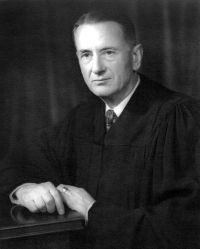
Portrait of Charles Evans Whittaker Charles Evans Whittaker McNeal v. Culver — Opinion of the Court

Yet this is a heavy burden to carry, especially for an accused who has no lawyer and who cannot afford to hire one. It is a burden placed on an accused solely by reason of his poverty. Its only sanction is Betts v. Brady which is so at war with our concept of equal justice under law that it should be overruled. [12] Are we to wait to overrule it until a case arises where the indigent is unable to make a convincing demonstration that the absence of counsel prejudiced him?
Source: Wikisource

Portrait of Charles Evans Whittaker Charles Evans Whittaker McNeal v. Culver — Opinion of the Court

Even the intelligent and educated layman has small and sometimes no skill in the science of law * * *. He lacks both the skill and knowledge adequately to prepare his defense, even though he have a perfect one. He requires the guiding hand of counsel at every step in the proceedings against him.' [10]
The result of our decisions is to refuse a State the power to force a person into a criminal trial without a lawyer if he wants one and can afford to hire one, but to deny the same protection to an accused who is too poor to retain counsel.
Source: Wikisource

Portrait of Charles Evans Whittaker Charles Evans Whittaker McNeal v. Culver — Opinion of the Court

Where the gravity of the crime and other factors-such as the age and education of the defendant, the conduct of the court or the prosecuting officials, and the complicated nature of the offense charged and the possible defenses thereto-render criminal proceedings without counsel so apt to result in injustice as to be fundamentally unfair,' the Constitution requires that the accused must have legal assistance at his trial.' Cash v.
Source: Wikisource

Get perspective with Kwize: daily news enlightened by great literature