Summary

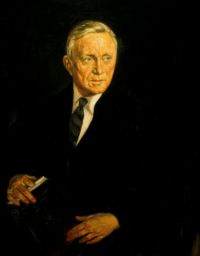
Portrait of William O. Douglas William O. Douglas Gillette v. United States — Dissent

The performance of certain acts, under certain circumstances, involves such a crisis of conscience as to invoke the protection which the first amendment provides for similar manifestations of conscience when expressed in verbal or written expressions of thought. The most awesome act which any society can demand of a citizen's conscience is the taking of a human life.'↑ L. Tolstoy, Writings On Civil Disobedience and Non-Violence 12 (1967) .↑ Id., at 15-16.
Source: Wikisource

Portrait of William O. Douglas William O. Douglas Gillette v. United States — Dissent

It is true that the First Amendment speaks of the free exercise of religion, not of the free exercise of conscience or belief. Yet conscience and belief are the main ingredients of First Amendment rights. They are the bedrock of free speech as well as religion. The implied First Amendment right of 'conscience' is certainly as high as the 'right of association' which we recognized in Shelton v.
Source: Wikisource

Get perspective with Kwize: daily news enlightened by great literature