Summary

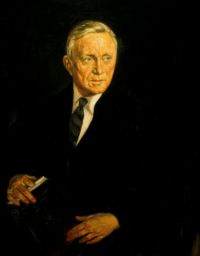
Portrait of William O. Douglas William O. Douglas Brandenburg v. Ohio — Concurring Opinion

Apart from rare instances of that kind, speech is, I think, immune from prosecution. Certainly there is no constitutional line between advocacy of abstract ideas, as in Yates, and advocacy of political action, as in Scales. The quality of advocacy turns on the depth of the conviction, and government has no power to invade that sanctuary of belief and conscience.
Source: Wikisource

Portrait of William O. Douglas William O. Douglas Brandenburg v. Ohio — Concurring Opinion

Justice Holmes, with whom Mr. Justice Brandeis concurred, dissented. While adhering to Schenck, he did not think that, on the facts, a case for overriding the First Amendment had been made out:
It is only the present danger of immediate evil or an intent to bring it about that warrants Congress in setting a limit to the expression of opinion where private rights are not concerned. Congress certainly cannot forbid all effort to change the mind of the country.
Source: Wikisource

Get perspective with Kwize: daily news enlightened by great literature