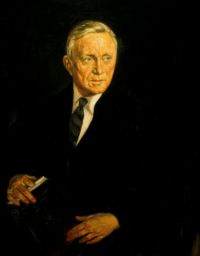
William O. Douglas

William O. Douglas

Summary

Portrait of William O. Douglas William O. Douglas Epton v. New York — Dissent

On the other hand, a citizen may take actions which do aid and comfort the enemy-making a speech critical of the government or opposing its measures, profiteering, striking in defense plants or essential work, and the hundred other things which impair our cohesion and diminish our strength-but if there is no adherence to the enemy in this, if there is no intent to betray, there is no treason.' (Italics added.)
Source: Wikisource

Portrait of William O. Douglas William O. Douglas Epton v. New York — Dissent

An argument can of course be made that overt acts are used only to demonstrate the existence of a conspiracy, and to draw reasonable inferences as to the intent of the alleged conspirator.
Although the Court has indicated that the overt act requirement of the treason clause ensures that 'thoughts and attitudes alone cannot make a treason' (Cramer v. United States, 325 U.S. 1, 29, 65 S.Ct. 918, 89 L.Ed. 1441) , it has never decided whether activities protected by the First Amendment can constitute overt acts for purposes of a conviction for treason.
Source: Wikisource

Get perspective with Kwize: daily news enlightened by great literature