Summary

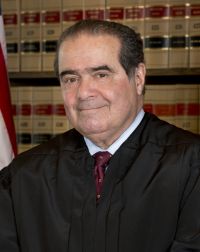
Portrait of Antonin Scalia Antonin Scalia Griffin v. United States — Opinion of the Court

In this sense "legal error" occurs when a jury, properly instructed as to the law, convicts on the basis of evidence that no reasonable person could regard as sufficient. But in another sense-a more natural and less artful sense-the term "legal error" means a mistake about the law, as opposed to a mistake concerning the weight or the factual import of the evidence. The answer to petitioner's objection is simply that we are using "legal error" in the latter sense.
That surely establishes a clear line that will separate Turner from Yates, and it happens to be a line that makes good sense.
Source: Wikisource

Portrait of Antonin Scalia Antonin Scalia Griffin v. United States — Opinion of the Court

Imagine the not unlikely case of a prosecution for defrauding an insurer through two means and for conspiring to defraud the insurer through the same two means; and imagine a failure of proof with respect to one of the means. Petitioner's proposal would produce the strange result of voiding a conviction on the conspiracy while sustaining a conviction on the substantive offense. We agree with the vast majority of federal courts of appeals, which have made no exception to the Turner rule for multiple-object and multiple-overt act conspiracies.
Source: Wikisource

Portrait of Antonin Scalia Antonin Scalia Griffin v. United States — Opinion of the Court

It is one thing to negate a verdict that, while supported by evidence, may have been based on an erroneous view of the law; it is another to do so merely on the chance-remote, it seems to us-that the jury convicted on a ground that was not supported by adequate evidence when there existed alternative grounds for which the evidence was sufficient.
Source: Wikisource

Get perspective with Kwize: daily news enlightened by great literature