Summary

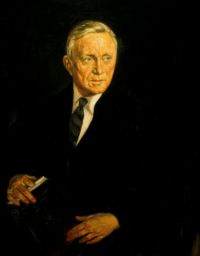
Portrait of William O. Douglas William O. Douglas Griffin v. California — Opinion of the Court

The question remains whether, statute or not, the comment rule, approved by California, violates the Fifth Amendment.
We think it does. It is in substance a rule of evidence that allows the State the privilege of tendering to the jury for its consideration the failure of the accused to testify. No formal offer of proof is made as in other situations; but the prosecutor's comment and the court's acquiescence are the equivalent of an offer of evidence and its acceptance.
Source: Wikisource

Portrait of William O. Douglas William O. Douglas Griffin v. California — Opinion of the Court

It is said, however, that the inference of guilt for failure to testify as to facts peculiarly within the accused's knowledge is in any event natural and irresistible, and that comment on the failure does not magnify that inference into a penalty for asserting a consitutional privilege. People v. Modesto, 62 Cal.2d 436, 452-453, 42 Cal.Rptr. 417, 426-427, 398 P.2d 753, 762-763. What the jury may infer, given no help from the court, is one thing. What it may infer when the court solemnizes the silence of the accused into evidence against him is quite another.
Source: Wikisource

Portrait of William O. Douglas William O. Douglas Griffin v. California — Opinion of the Court

It is not every one, however, honest, who would therefore willingly be placed on the witness stand. The statute, in tenderness to the weakness of those who from the causes mentioned might refuse to ask to be witnesses, particularly when they may have been in some degree compromised by their association with others, declares that the failure of a defendant in a criminal action to request to be a witness shall not create any presumption against him.' 149 U.S., p.
Source: Wikisource

Get perspective with Kwize: daily news enlightened by great literature