Summary

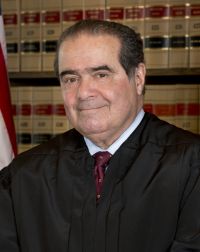
Portrait of Antonin Scalia Antonin Scalia Carella v. California — Opinion of the Court

If the jury may have failed to consider evidence of intent, a reviewing court cannot hold that the error did not contribute to the verdict. The fact that the reviewing court may view the evidence of intent as overwhelming is then simply irrelevant. To allow a reviewing court to perform the jury's function of evaluating the evidence of intent, when the jury never may have performed that function, would give too much weight to society's interest in punishing the guilty and too little weight to the method by which decisions of guilt are to be made.
Source: Wikisource

Portrait of Antonin Scalia Antonin Scalia Carella v. California — Opinion of the Court

In explaining why the use of an impermissible presumption, unlike the granting of a directed verdict for the State, can in some circumstances be deemed harmless error, we observed:
"When a jury is instructed to presume malice from predicate facts, it still must find the existence of those facts beyond a reasonable doubt. . . . In many cases, the predicate facts conclusively establish intent so that no rational jury could find that the defendant committed the relevant criminal act but did not intend to cause injury.
Source: Wikisource

Portrait of Antonin Scalia Antonin Scalia Carella v. California — Opinion of the Court

For nothing in the instruction would have directed the jury, or even permitted it, to consider and apply that evidence in reaching its verdict. And the problem would not be cured by an appellate court's determination that the record evidence unmistakably established guilt, for that would represent a finding of fact by judges, not by a jury. As with a directed verdict, "the error in such a case is that the wrong entity judged the defendant guilty."
Source: Wikisource

Get perspective with Kwize: daily news enlightened by great literature