Summary

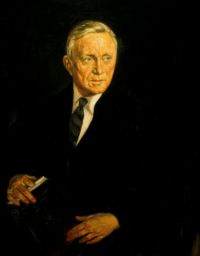
Portrait of William O. Douglas William O. Douglas Hopkins v. Cohen — Opinion of the Court

Usually, these large fees result from a contingent-fee arrangement under which the attorney is entitled to a percentage (frequently one-third to one-half) of the accrued benefits. Since litigation necessarily involves a considerable lapse of time, in many cases large amounts of accrued benefits, and consequently large legal fees, are payable if the claimant wins his case.
Source: Wikisource

Portrait of William O. Douglas William O. Douglas Hopkins v. Cohen — Opinion of the Court

The wife and child each compute their benefits on the basis of a percentage share of the disabled claimant's primary benefits determined under § 223. See §§ 202 (b) (2) [4] and 202 (d) (2) . The maximum family benefit depends upon the amount of the primary benefit to which the disabled claimant is entitled. See §§ 215 (a) and 203 (a) . The scheme of the Act thus proceeds from a recognition of an intimate relationship between the varying amounts of benefits due the disabled claimant and his dependents.
Hopkins was receiving disability payments under § 223 between March 1961 and December 1962
Source: Wikisource

Portrait of William O. Douglas William O. Douglas Hopkins v. Cohen — Opinion of the Court

Rather, the wife and children had been receiving them as dependents of a disabled person until they were terminated by respondent's erroneous decision that the husband was no longer disabled. When that decision was reversed by the District Court, the only impediment standing in the way of the receipt of past-due benefits by the wife and children was removed. In a realistic sense, then, the attorney was representing fully the interests of the wife and children when he litigated the question of the husband's disability.↑ S.Rep.No.
Source: Wikisource

Get perspective with Kwize: daily news enlightened by great literature