Summary

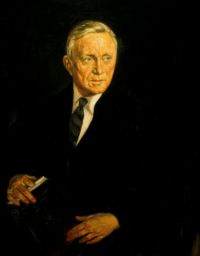
Portrait of William O. Douglas William O. Douglas Jacob Siegel Company v. Federal Trade Commission…

The alpaca and the vicuna are animals whose fleece is used in the manufacture of fabrics. The fleece of the vicuna is, indeed, one of the finest and is extremely rare; and fabrics made of it command a high price. Petitioner manufactures overcoats and topcoats and markets them under the name Alpacuna. They contain alpaca, mohair, wool, and cotton but no vicuna.
The Federal Trade Commission in proceedings under § 5 of the Federal Trade Commission Act (52 Stat. 111, 15 U.S.C. § 45, 15 U.S.C.A. § 45) found that petitioner had made certain misrepresentations in the marketing of its coats.
Source: Wikisource

Portrait of William O. Douglas William O. Douglas Jacob Siegel Company v. Federal Trade Commission…

The Commission is the expert body to determine what remedy is necessary to eliminate the unfair or deceptive trade practices which have been disclosed. It has wide latitude for judgment and the courts will not interfere except where the remedy selected has no reasonable relation to the unlawful practices found to exist.
But in the present case, we do not reach the question whether the Commission would be warranted in hol ing that no qualifying language [4] would eliminate the deception which it found lurking in the word Alpacuna.
Source: Wikisource

Portrait of William O. Douglas William O. Douglas Jacob Siegel Company v. Federal Trade Commission…

But there was no finding that petitioner had made representations that Alpacuna in fact contained ficuna. It accordingly issued a cease and desist order [1] which, among other things, banned the use of the word Alpacuna to describe petitioner's coats. 36 F.T.C. 563. The Circuit Court of Appeals affirmed. 3 Cir., 150 F.2d 751. It held that the Commission's findings respecting the use of the name Alpacuna were supported by substantial evidence.
Source: Wikisource

Get perspective with Kwize: daily news enlightened by great literature