Summary

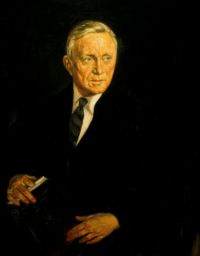
Portrait of William O. Douglas William O. Douglas Oregon v. Mitchell — Separate Opinion

Equality of voting by all who are deemed mature enough to vote is certainly consistent "with the letter and spirit of the constitution." Much is made of the fact that Art. I, § 4, of the Constitution [8] gave Congress only the power to regulate the "Manner of holding Elections," not the power to fix qualifications for voting in elections. But the Civil War Amendments — the Thirteenth, Fourteenth, and Fifteenth — made vast inroads on the power of the States.
Source: Wikisource

Portrait of William O. Douglas William O. Douglas Oregon v. Mitchell — Separate Opinion

It is a reasoned judgment that those who have such a large "stake" in modern elections as 18-year-olds, whether, in times of war or peace, should have political equality. As was made plain in the dissent in Colegrove v. Green, 328 U.S. 549, 566 (whose reasoning was approved in Gray v. Sanders, 372 U.S. 368, 379) , the Equal Protection Clause does service to protect the right to vote in federal as well as in state elections.
I would sustain the choice which Congress has made.
Source: Wikisource

Portrait of William O. Douglas William O. Douglas Oregon v. Mitchell — Separate Opinion

The right to vote freely for the candidate of one's choice is of the essence of a democratic society, and any restrictions on that right strike at the heart of representative government. This "right to choose, secured by the Constitution," United States v. Classic, 313 U.S. 299, 315, is a civil right of the highest order. Voting concerns "political" matters; but the right is not "political" in the constitutional sense.
Source: Wikisource

Get perspective with Kwize: daily news enlightened by great literature