Summary

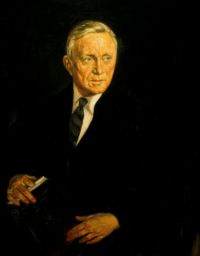
Portrait of William O. Douglas William O. Douglas Powell v. Cormack — Concurrence

The Senate was nonetheless troubled by the suggestion that the Constitution compelled it to accept anyone whom the people might elect, no matter how egregious and even criminal his behavior. No need to worry, said Murdock. It is true that the Senate cannot invoke its majority power to 'judge' under Art. I, § 5, cl. 1, as a device for excluding men elected by the people who possess the qualifications enumerated by the Constitution. But it does have the power under Art. I, § 5, cl. 2, to expel anyone it designates by a two-thirds vote.
Source: Wikisource

Portrait of William O. Douglas William O. Douglas Powell v. Cormack — Concurrence

I, § 5, provides that: 'Each House shall be the Judge of the Elections, Returns and Qualifications of its own Members * * *.' Contests may arise over whether an elected official meets the 'qualifications' of the Constitution, in which event the House is the sole judge. [3] But the House is not the sole judge when 'qualifications' are added which are not specified in the Constitution. [4]
A man is not seated because he is a Socialist or a Communist.
Source: Wikisource

Portrait of William O. Douglas William O. Douglas Powell v. Cormack — Concurrence

LUCAS. The Senate can do anything it wants to do * * *. Yes; the Senate can deny a person his seat simply because it does not like the cut of his jaw, if it wishes to.' [21]
Senator Murdock argued that the only qualifications for service in the Senate were those enumerated in the Constitution; that Congress had the power to review those enumerated qualifications; but that it could not-while purporting to 'judge' those qualifications-in reality add to them.
Source: Wikisource

Get perspective with Kwize: daily news enlightened by great literature