Summary

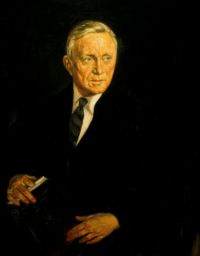
Portrait of William O. Douglas William O. Douglas Railroad Retirement Board v. Duquesne Warehouse Company…

Duquesne argues on the basis of that legislative history that any service 'in connection with the transportation' of property or any service 'in connection with' the receipt, etc., of 'property transported by railroad,' as used in the present Acts, means that kind of activity which is defined by the Interstate Commerce Act as forming a part of transportation service. On the other hand, the Board argues that the statutory definition of 'employer' is not so restricted.
Source: Wikisource

Portrait of William O. Douglas William O. Douglas Railroad Retirement Board v. Duquesne Warehouse Company…

The Railroad Retirement Board adjudicates claims of eligible employees for the various types of benefits created by the Act. § 10 (b) . The eligibility of an employee for such benefits is based on service to those included in the Act's definition of 'employer.' § 1 (a) . The question arose whether the Duquesne Warehouse Co. was such an 'employer.' The Board after a hearing found in No. 95 that it was. Duquesne, pursuant to the provisions of § 11 of the Act, brought suit in a district court to compel the Board to set aside its order. [1] That court rendered judgment for Duquesne.
Source: Wikisource

Portrait of William O. Douglas William O. Douglas Railroad Retirement Board v. Duquesne Warehouse Company…

Duquesne's answer is that the service of loading and unloading is done by it for its customers, that these services are rendered before railroad transportation has begun or after it has ended, that they are not and cannot be a part of railroad transportation since the tariff of the Pennsylvania forbids it from performing the ervices. Duquesne's conclusion is that under such circumstances loading and unloading are not and cannot be a part of railroad transportation.
Source: Wikisource

Get perspective with Kwize: daily news enlightened by great literature