Summary

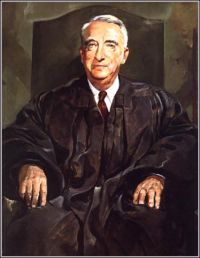
Portrait of Fred M. Vinson Fred M. Vinson Chicago Milwaukee St. Paul Pacific Company v…

But the forwarder is always its own representative, and as between its customer, the shipper, and an underlying carrier allegedly responsible for loss or damage, the forwarder's tendency would naturally be to placate the former at the expense of the latter if the right-over existed and was applicable. These facts are, we feel, persuasive that Congress meant the right-over given in § 1013 to extend no farther than to actions against those with whom forwarders are permitted to enter into cooperative arrangements-i.e., against those to whom the forwarder does not bear the relation of shipper.
Source: Wikisource

Portrait of Fred M. Vinson Fred M. Vinson Chicago Milwaukee St. Paul Pacific Company v…

The freight forwarder charged a rate covering the entire transportation and made its profit by consolidating the shipment with others in carload quantities to take advantage of the spread between carload and 1. c. 1. rates. It held itself out not merely to arrange with common carriers for the transportation of the goods, but rather to deliver them safely to the consignee. The shipper seldom if ever knew which carrier would be utilized in the carriage of his shipment.
Source: Wikisource

Portrait of Fred M. Vinson Fred M. Vinson Chicago Milwaukee St. Paul Pacific Company v…

Elaborate freight-claim rules have been established covering the investigation, settlement, and defense of claims and the allocation of liability between carriers when, as is frequently the case, responsibility for loss or damage cannot be precisely ascertained. Arbitration boards settle disputes arising between carriers under the rules. As a practical matter, the right-over given by § 20 (12) is very little used by carriers, and indeed it is of no value when responsibility cannot definitely be placed upon any one carrier.
Source: Wikisource

Get perspective with Kwize: daily news enlightened by great literature