Summary

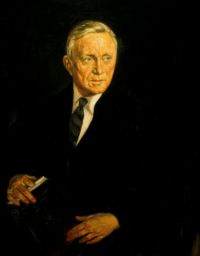
Portrait of William O. Douglas William O. Douglas Schaffer v. United States — Dissent

This is unlike the case where the conspiracy count and the substantive counts are submitted to the jury, the verdict being not guilty of conspiracy but guilty on the other counts. There is then no escape from the quandary in which defendants find themselves. Once the conspiracy is supported by evidence, it presents issues for the jury to decide. What may motivate a particular jury in returning a verdict of not guilty on the conspiracy count may never be known.
Source: Wikisource

Portrait of William O. Douglas William O. Douglas Schaffer v. United States — Dissent

There must somehow be a nexus between the several transactions charged against the several defendants, lest proof of distinct transactions blend to the prejudice of some defendants. The evidence concerning these petitioners was not in any proper sense of the words evidence concerning 'the same series of acts or transactions' constituting an offense.
Source: Wikisource

Portrait of William O. Douglas William O. Douglas Schaffer v. United States — Dissent

It is not enough to say that evidence of the guilt of each of the present petitioners may have been clear. Reasons for severance are founded on the principle that evidence against one person may not be used against a codefendant whose crime is unrelated to the others. Instructions can be given the jury and admonitions can be made explicit that the line between the various defendants must be kept separate.
Source: Wikisource

Get perspective with Kwize: daily news enlightened by great literature