Summary

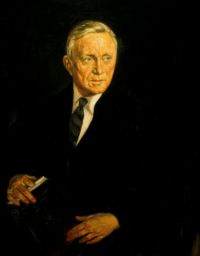
Portrait of William O. Douglas William O. Douglas Schlagenhauf v. Holder — Dissent

The plaintiff by suing puts those issues 'in controversy.' A plaintiff, by coming into court and asserting that he has suffered an injury at the hands of the defendant, has thereby put his physical or mental condition 'in controversy.' Thus it may be only fair to provide that he may not be permitted to recover his judgment unless he permits an inquiry into the true nature of his condition.
Source: Wikisource

Portrait of William O. Douglas William O. Douglas Schlagenhauf v. Holder — Dissent

But plaintiff's doctors will naturally be inclined to go on a fishing expedition in search of anything which will tend to prove that the defendant was unfit to perform the acts which resulted in the the plaintiff's injury. And a doctor for a fee can easily discover something wrong with any patient-a condition that in prejudiced medical eyes might have caused the accident. Once defendants are turned over to medical or psychiatric clinics for an analysis of their physical well-being and the condition of their psyche, the effective trial will be held there and not before the jury.
Source: Wikisource

Portrait of William O. Douglas William O. Douglas Schlagenhauf v. Holder — Dissent

The Advisory Committee on Rules for Civil Procedure in its October 1955 Report of Proposed Amendments to the Rules of Civil Procedure for the United States District Courts proposed that Rule 35 be broadened to include situations where the mental or physical condition or 'the blood relationship' of a party, or 'of an agent or a person in the custody or under the legal control of a party,' is 'in controversy.' We did not adopt that Rule in its broadened form.
Source: Wikisource

Get perspective with Kwize: daily news enlightened by great literature