Summary

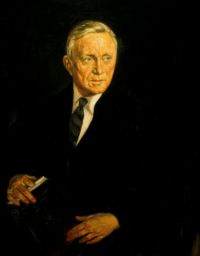
Portrait of William O. Douglas William O. Douglas Schneider v. Smith — Opinion of the Court

A saboteur on a merchant vessel may, of course, be dangerous. But no charge that appellant was a saboteur was made. Indeed, no conduct of appellant was at issue before the Commandant. The propositions tendered in the complaint were (1) plaintiff is now and always has been loyal to the United States; (2) he has not been active in any organization on the Attorney General's list for the past 10 years; (3) he has never committed any act of sabotage or espionage or any act inimical to the security of the United States.
Source: Wikisource

Portrait of William O. Douglas William O. Douglas Schneider v. Smith — Opinion of the Court

The Magnuson Act gives the President no express authority to set up a screening program for personnel on merchant vessels of the United States. As respects 'any foreign-flag vessels' the power to control those who 'go or remain on board' is clear. 50 U.S.C. § 191 (a) . As respects personnel of our own merchant ships, the power exists under the Act only if it is found in the power to 'safeguard' vessels and waterfront facilities against 'sabotage or other subversive acts,' that is, under § 191 (b) .
Source: Wikisource

Portrait of William O. Douglas William O. Douglas Schneider v. Smith — Opinion of the Court

The Solicitor General argues that the power to exclude persons from vessels 'clearly implies authority to establish a screening procedure for determining who shall be allowed on board.' But that power to exclude is contained in § 191 (a) which, as noted, applies to 'foreign-flag vessels,' while, as we have said, the issue tendered here must find footing in § 191 (b) . [3]
We agree with the District Court that keeping our merchant marine free of saboteurs is within the purview of this Act. Our question is a much narrower one.
Source: Wikisource

Get perspective with Kwize: daily news enlightened by great literature