Summary

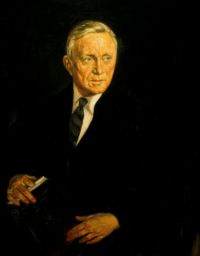
Portrait of William O. Douglas William O. Douglas Stotland v. Pennsylvania — Dissent

Appellants claim that as a regulatory measure, the ordinance and proclamation are unconstitutionally overbroad. I do not see how that question can be deemed to be 'insubstantial.'
Control of civil disorders that may threaten the very existence of the State is certainly within the police power of government. Yet does a particular proclamation violate equal protection?
Source: Wikisource

Portrait of William O. Douglas William O. Douglas Stotland v. Pennsylvania — Dissent

The Philadelphia ordinance involved in this case, and the mayor's proclamation issued under its authority, raise serious questions under the First Amendment. First, the prohibition of assembly extended not merely to publicly-owned property, but to 'any outdoor place,' public or private. Second, the proclamation covered all types of assembly, except for three narrow exceptions, regardless of how peaceful, orderly, and otherwise lawful that assembly might be. Third, there was no limitation on the length of the prohibition, for the state of emergency could be extended indefinitely.
Source: Wikisource

Portrait of William O. Douglas William O. Douglas Stotland v. Pennsylvania — Dissent

On April 4, 1968, the Reverend Martin Luther King., Jr., was assassinated. On April 5, 1968, at 9 p.m., the mayor proclaimed a limited state of emergency, effective until 6 a.m. on April 10, 1968, 'unless further extended,' and prohibited groups of 12 or more from gathering or congregating in any outdoor place, except in those situations authorized by the ordinance. The proclamation contained no specific factual findings to support the conclusion that a threat of 'civil disturbance,' 'disorder,' or 'riot' existed.
Source: Wikisource

Get perspective with Kwize: daily news enlightened by great literature