Summary

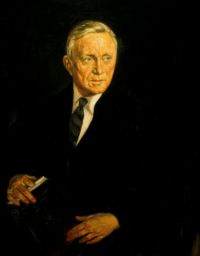
Portrait of William O. Douglas William O. Douglas Murdock v. Pennsylvania — Opinion of the Court

A license tax certainly does not acquire constitutional validity because it classifies the privileges protected by the First Amendment along with the wares and merchandise of hucksters and peddlers and treats them all alike. Such equality in treatment does not save the ordinance. Freedom of press, freedom of speech, freedom of religion are in a preferred position.
Source: Wikisource

Portrait of William O. Douglas William O. Douglas Murdock v. Pennsylvania — Opinion of the Court

A license tax applied to activities guaranteed by the First Amendment would have the same destructive effect. It is true that the First Amendment, like the commerce clause, draws no distinction between license taxes, fixed sum taxes, and other kinds of taxes. But that is no reason why we should shut our eyes to the nature of the tax and its destructive influence. The power to impose a license tax on the exercise of these freedoms is indeed as potent as the power of censorship which this Court has repeatedly struck down.
Source: Wikisource

Portrait of William O. Douglas William O. Douglas Murdock v. Pennsylvania — Opinion of the Court

They may not prohibit the distribution of handbills in the pursuit of a clearly religious activity merely because the handbills invite the purchase of books for the improved understanding of the religion or because the handbills seek in a lawful fashion to promote the raising of funds for religious purposes.' But the mere fact that the religious literature is 'sold' by itinerant preachers rather than 'donated' does not transform evangelism into a commercial enterprise.
Source: Wikisource

Get perspective with Kwize: daily news enlightened by great literature