Summary

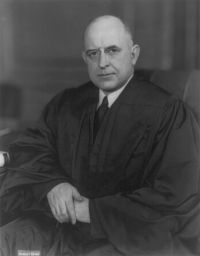
Portrait of Stanley Forman Reed Stanley Forman Reed Jones v. City of Opelika (316 U.S. 584…

Courts, no more than Constitutions, can intrude into the consciences of men or compel them to believe contrary to their faith or think contrary to their convictions, but courts are competent to adjudge the acts men do under color of a constitutional right, such as that of freedom of speech or of the press or the free exercise of religion and to determine whether the claimed right is limited by other recognized powers, equally precious to mankind.
Source: Wikisource

Portrait of Stanley Forman Reed Stanley Forman Reed Jones v. City of Opelika (316 U.S. 584…

The taxes are insupportable either as a tax on the dissemination of ideas or as a tax on the collection of funds for religious purposes. For on its face a flat license tax restrains in advance the freedom taxed and tends inevitably to suppress its exercise. The First Amendment prohibits all laws abridging freedom of press and religion, not merely some laws or all except tax laws. It is true that the constitutional guaranties of freedom of press and religion, like the commerce clause, make no distinction between fixed-sum taxes and other kinds.
Source: Wikisource

Portrait of Stanley Forman Reed Stanley Forman Reed Jones v. City of Opelika (316 U.S. 584…

The First Amendment is not confined to safeguarding freedom of speech and freedom of religion against discriminatory attempts to wipe them out. On the contrary the Constitution, by virtue of the First and the Fourteenth Amendments, has put those freedoms in a preferred position. Their commands are not restricted to cases where the protected privilege is sought out for attack. They extend at least to every form of taxation which, because it is a condition of the exercise of the privilege, is capable of being used to control or suppress it.
Source: Wikisource

Get perspective with Kwize: daily news enlightened by great literature