Summary

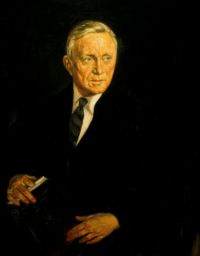
Portrait of William O. Douglas William O. Douglas United States Chapman v. Federal Power Commission…

If Congress left this part of the public domain for exploitation by private power groups, why did it gear them to the employment requirements of the post-war period and the budget requirements of the Federal Government? Approval of the projects by Congress under these various terms and conditions can only mean one thing-that Congress gave its sanction to their development as public projects.
To be sure, Congress in the Federal Power Act left part of the public domain to be exploited by private interests, if the Federal Power Commission so orders.
Source: Wikisource

Portrait of William O. Douglas William O. Douglas United States Chapman v. Federal Power Commission…

It is difficult to arm. It is more difficult to disarm. Post-war unemployment will be a major national problem. While we are defending our freedom and our way of life, we must not fail to take stock of the problem of unemployment which we must face when the war is over.
'We must profit by the experience of 1920. We must profit by the experience of 1930. A reservoir of projects must be adopted.
Source: Wikisource

Portrait of William O. Douglas William O. Douglas United States Chapman v. Federal Power Commission…

It deals with assets belonging to all the people.
These facts must be kept in mind in reading § 10 of the Flood Control Act of 1944, 58 Stat. 887, 891. [1] From that starting point I think it only fair to conclude (1) that if Congress undertook to remove this project from the public domain, it would make its purpose plain; and (2) that when Congress approved the project it meant to reserve it for the public good, not to make it available to private interests to exploit for their own profit.
Source: Wikisource

Get perspective with Kwize: daily news enlightened by great literature