Summary

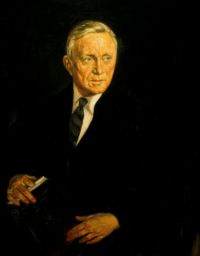
Portrait of William O. Douglas William O. Douglas United States Department of Agriculture v… (1973)

Taking a person into one's home because he is poor or needs help or brings happiness to the household is of the same dignity.
Congress might choose to deal only with members of a family of one or two or three generations, treating it all as a unit. Congress, however, has not done that here. Concededly an individual living alone is not disqualified from the receipt of food stamp aid, even though there are other members of the family with whom he might theoretically live.
Source: Wikisource

Portrait of William O. Douglas William O. Douglas United States Department of Agriculture v… (1973)

I suppose no one would doubt that an association of people working in the poverty field would be entitled to the same constitutional protection as those working in the racial, banking, or agricultural field. I suppose poor people holding a meeting or convention would be under the same constitutional umbrella as others. The dimensions of the "unrelated" person problem under the Food Stamp Act are in that category. As the facts of this case show, the poor are congregating in households where they can better meet the adversities of poverty.
Source: Wikisource

Portrait of William O. Douglas William O. Douglas United States Department of Agriculture v… (1973)

Able-bodied persons must register and accept work or lose their food stamp rights. 7 U.S.C. § 2014 (c) . I could not say that this "unrelated" person provision has no "rational" relation to control of fraud. We deal here, however, with the right of association, protected by the First Amendment. People who are desperately poor but unrelated come together and join hands with the aim better to combat the crises of poverty. The need of those living together better to meet those crises is denied, while the need of households made up of relatives that is no more acute is serviced.
Source: Wikisource

Get perspective with Kwize: daily news enlightened by great literature