Summary

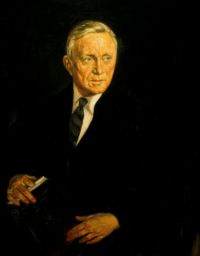
Portrait of William O. Douglas William O. Douglas United States v. Munsingwear — Opinion of the Court

The question whether the respondent had sold the commodities in violation of the federal regulation, having been determined in the first suit, is therefore laid at rest by a principle which seeks to bring litigation to an end and promote certainty in legal relations.
That is the result unless the dismissal of the appeal on the ground of mootness and the deprivation of the United States of any review of the case in the Court of Appeals warrant an exception to the established rule.
Source: Wikisource

Portrait of William O. Douglas William O. Douglas United States v. Munsingwear — Opinion of the Court

The United States filed a complaint on two counts against the respondent, alleging violations of a regulation fixing the maximum price of commodities which respondent sold. The first count prayed for an injunction, the second sought treble damages. By agreement and a pre-trial order the second count was held in abeyance pending trial and final determination of the suit for an injunction. The same procedure was followed as respects another suit for treble damages raising the same issues and covering a later period. The District Court held that respondent's prices complied with the regulation.
Source: Wikisource

Portrait of William O. Douglas William O. Douglas United States v. Munsingwear — Opinion of the Court

When that procedure is followed, the rights of all parties are preserved; none is prejudiced by a decision which in the statutory scheme was only preliminary.
In this case the United States made no motion to vacate the judgment. It acquiesced in the dismissal. It did not avail itself of the remedy it had to preserve its rights. Denial of a motion to vacate could bring the case here. Our supervisory power over the judgments of the lower federal courts is a broad one.
Source: Wikisource

Get perspective with Kwize: daily news enlightened by great literature