Summary

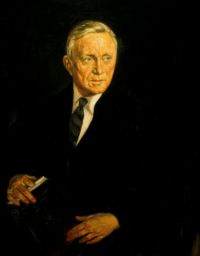
Portrait of William O. Douglas William O. Douglas United States v. Southern Ute Tribe or Band of Indians…

Were they ceded in 1880, yet not released by the Indians until 1895? How can it be paid that Royce Area 617 was ceded in 1880 yet retained until 1895, since, as the Court of Claims stated, 'the Southern Utes were allowed to remain on their surveyed reservation for 15 years after the purported cession, and the right to remove them without their further consent was not asserted or exercised.' 423 F.2d 346, 356, 191 Ct.Cl. 1, 19.
Source: Wikisource

Portrait of William O. Douglas William O. Douglas United States v. Southern Ute Tribe or Band of Indians…

As of 1880, the Confederated Bands of Ute Indians occupied a reservation of 12,000,000 acres in western Colorado. The White River Utes and the Uncompahgre Utes occupied the northern portion (Royce Area 616) , and the Southern Utes occupied an almost separated southern section (Royce Area 617) . In 1880, the Utes entered into a treaty with the United States. It provided that the chiefs would persuade their people
'to cede to the United States all the territory of the present Ute Reservation in Colorado, except as hereinafter provided for their settlement.
Source: Wikisource

Portrait of William O. Douglas William O. Douglas United States v. Southern Ute Tribe or Band of Indians…

To credit the money received only to the account of Southern Utes would have been a violation of the treaty if the land had been ceded in 1880.↑ If the land had been ceded under the 1880 agreement, acceptance of the Act of 1895 was completely unnecessary.↑ 'Thus, defendant's officials do not only concede that the lands were ceded in 1895, but they also enlighten us as to the status it retrospectively applied to the 1880 agreement.
Source: Wikisource

Get perspective with Kwize: daily news enlightened by great literature