Summary

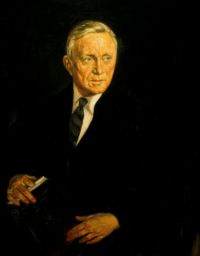
Portrait of William O. Douglas William O. Douglas Warren v. United States — Opinion of the Court

No master would take a crew to sea if he could not grant shore leave, and no crew would be taken if it could never obtain it. * * * In short, shore leave is an elemental necessity in the sailing of ships, a part of the business as old as the art, not merely a personal diversion.
'The voyage creates not only the need for relaxation ashore, but the necessity that it be satisfied in distant and unfamiliar ports. If in those surroundings the seaman, without disqualifying misconduct, contracts disease or incurs injury, it is because of the voyage, the shipowner's business.
Source: Wikisource

Portrait of William O. Douglas William O. Douglas Warren v. United States — Opinion of the Court

The assumption is hardly sound that the normal uses and purposes of shore leave are 'exclusively personal' and have no relation to the vessel's business. Men cannot live for long cooped up aboard ship without substantial impairment of their efficiency, if not also serious danger to discipline. Relaxation beyond the confines of the ship is necessary if the work is to go on, more so that it may move smoothly.
Source: Wikisource

Portrait of William O. Douglas William O. Douglas Warren v. United States — Opinion of the Court

Under our construction the Convention provides a reasonable average for international application. The definition of the exceptions itself helps provide the average, leaving the creation of the exceptions to any source of law which the member nations recognize. That view serves the purpose of the Convention and conforms to the normal meaning of the words used. Our conclusion is that both paragraph 1 and paragraph 2 of Art. 2 state the standard of liability which legislative and decisional law define in particularity.
Source: Wikisource

Get perspective with Kwize: daily news enlightened by great literature