Summary

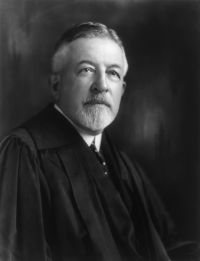
Portrait of Edward Terry Sanford Edward Terry Sanford Lindgren v. United States — Opinion of the Court

Nor can the libel be sustained as one to recover indemnity for Barford's death under the old maritime rules on the ground that the injuries were occasioned by the unseaworthiness of the vessel. Aside from the fact that the libel does not allege the unseaworthiness of the vessel and is based upon negligence alone, an insuperable objection to this suggestion is that the prior maritime law, as hereinabove stated, gave no right to recover indemnity for the death of a seaman, although occasioned by unseaworthiness of the vessel.
Source: Wikisource

Portrait of Edward Terry Sanford Edward Terry Sanford Lindgren v. United States — Opinion of the Court

By the Merchant Marine Act, however, the prior maritime law was modified by giving to personal representatives of seamen whose death had resulted from personal injuries, the right to maintain an action for damages in accordance with the provisions of the Federal Employers' Liability Act. It is plain that the Merchant Marine Act is one of general application intended to bring about the uniformity in the exercise of admiralty jurisdiction required by the Constitution, and necessarily supersedes the application of the death statutes of the several States.
Source: Wikisource

Portrait of Edward Terry Sanford Edward Terry Sanford Lindgren v. United States — Opinion of the Court

The libel declared specifically 'in a cause of tort and death by wrongful act;' alleged that Barford's death was occasioned by negligence and wrongdoing on the part of the United States, its officers, servants and employees in respect to the fastening of the lifeboat and various other matters; and averred that the libellant, as administrator of Barford's estate, was entitled to recover, 'for and on behalf of the decedent's dependents and heirs,' damages for his death.
Source: Wikisource

Get perspective with Kwize: daily news enlightened by great literature