Summary

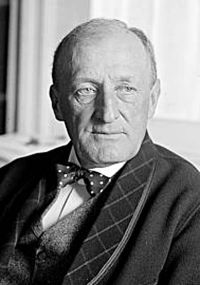
Portrait of James Clark McReynolds James Clark McReynolds Mellon v. Goodyear — Opinion of the Court

One is for the wrong to the injured person and is confined to his personal loss and suffering before he died, while the other is for the wrong to the beneficiaries and is confined to their pecuniary loss through his death. One begins where the other ends, and a recovery upon both in the same action is not a double recovery for a single wrong but a single recovery for a double wrong.
Source: Wikisource

Portrait of James Clark McReynolds James Clark McReynolds Mellon v. Goodyear — Opinion of the Court

By the overwhelming weight of judicial authority, where a statute of the nature of Lord Campbell's Act in effect gives a right to recover damages for the benefit of dependents, the remedy depends upon the existence in the decedent at the time of his death of a right of action to recover for such injury. A settlement by the wrongdoer with the injured person, in the absence of fraud or mistake, precludes any remedy by the personal representative based upon the same wrongful act.
Source: Wikisource

Portrait of James Clark McReynolds James Clark McReynolds Mellon v. Goodyear — Opinion of the Court

Thus, a release by the party injured of his right of action, or a recovery of damages by him for the injury, is a complete defense in the statutory action. But, while the courts have agreed in their decisions, they have had difficulty in reconciling them with the express declaration of the statute that the action may be maintained whenever the act, neglect, or default is such that the party injured, if death had not ensued, might have maintained an action. * * *
'It is hardly possible to place the general holding upon any very logical ground.
Source: Wikisource

Get perspective with Kwize: daily news enlightened by great literature