Summary

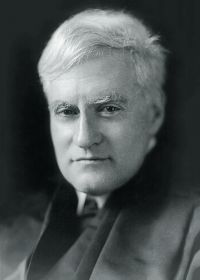
Portrait of Benjamin N. Cardozo Benjamin N. Cardozo Van Beeck v. Sabine Towing Company…

Viewing the cause of action as one to compensate a mother for the pecuniary loss caused to her by the negligent killing of her son, we think the mother's death does not abate the suit, but that the administrator may continue it, for the recovery of her loss up to the moment of her death, though not for anything thereafter, [17] the damages when collected to be paid to her estate. Such is the rule in many of the state courts in which like statutes are in force.
Source: Wikisource

Portrait of Benjamin N. Cardozo Benjamin N. Cardozo Van Beeck v. Sabine Towing Company…

The statutory cause of action to recover damages for death ushered in a new policy and broke with old traditions. Its meaning is likely to be misread if shreds of the discarded policy are treated as still clinging to it and narrowing its scope. The case of Higgins v. Butcher, Noy 18; Yelv. 89, which arose in the King's Bench in 1606, is the starting point of the rule, long accepted in our law, though at times with mutterings of disapproval, [1] that in an action of tort damages are not recoverable by any one for the death of a human being.
Source: Wikisource

Portrait of Benjamin N. Cardozo Benjamin N. Cardozo Van Beeck v. Sabine Towing Company…

But the denial of a cause of action for wrongs producing death has been ascribed to other sources also. The explanation has been found at times in the common-law notion that trespass as a civil wrong is drowned in a felony. [9] As to the adequacy of this explanation, grave doubt has been expressed. [10] None the less, the rule as to felony merger seems to have coalesced, even if in a confused way, with the rule as to abatement, [11] and the effect of the two in combination was to fasten upon the law a doctrine which it took a series of statutes to dislodge.
Source: Wikisource

Get perspective with Kwize: daily news enlightened by great literature