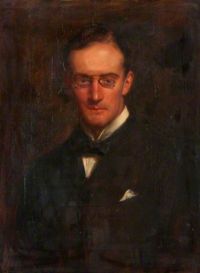
William Paton Ker

William Paton Ker

Summary

Portrait of William Paton Ker William Paton Ker Sturla the Historian (1906)

Norway and Iceland, in the thirteenth century, are in contrast almost as if they had been intended for a logical example, to illustrate the method of Agreement and Difference; or for an historical demonstration, to explain the nature and functions of monarchy in the Middle Ages. The original emigmtion to Iceland did not drain away all the freedom out of Norway; the Norwegians who stayed behind were not slavish and obedient people
Source: Wikisource

Portrait of William Paton Ker William Paton Ker Sturla the Historian (1906)

Nowhere is this more manifest than in the histories of Iceland, the prose narrative literature of the republic, in which Sturla, son of Thord, is one of the last and one of the most eminent names. Icelandic prose of the great age is in contradiction to a number of things that are commonly believed and reported about medieval literature: such as, that it is quaint, absurd, superstitious, childish, without perspective. For example: the Edda of Snorri Sturluson is a thirteenth-century prose book that has very little to learn from any renaissance or revival of learning.
Source: Wikisource

Portrait of William Paton Ker William Paton Ker Sturla the Historian (1906)

When men were turning in to sleep, a sailor of the king's asked who should tell them stories. There was little answer. Then said he: 'Sturla the Icelander, will you tell stories?' 'As you will', said Sturla. So he told them the story of Huld, better and fuller than any one there had ever heard it told before. Then many men pushed forward to the fore-deck, wanting to hear as clearly as might be, and there was a great crowd. The queen asked: 'What is that crowd on deck there?' A man answered: 'The men are listening to the story that the Icelander tells'.
Source: Wikisource

Get perspective with Kwize: daily news enlightened by great literature