Summary

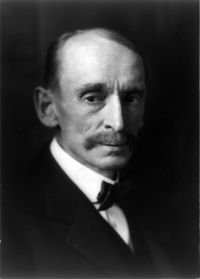
Portrait of William R. Day William R. Day John Powers v. United States — Opinion of the Court

There is some difference of opinion expressed in the authorities, but the rule recognized in this court is that a defendant who voluntarily takes the stand in his own behalf, thereby waiving his privilege, may be subjected to a cross-examination concerning his statement. 'Assuming the position of a witness, he is entitled to all its rights and protection, and is subject to all its criticisms and burdens;' and may be fully cross-examined as to the testimony voluntarily given.
Source: Wikisource

Portrait of William R. Day William R. Day John Powers v. United States — Opinion of the Court

As to the suggestion that § 860 of the Revised Statutes (U.S.C.omp. Stat. 1901, p. 661) prevented the introduction of the testimony given by defendant before the commissioner, that section, providing that no pleading, nor any discovery or evidence obtained from a party by means of a judicial proceeding shall be used in evidence against him in a criminal proceeding, can have no bearing where, as in the present case, the accused voluntarily testified in his own behalf in the course of the same proceeding, thereby himself opening the door to legitimate cross-examination.
Source: Wikisource

Portrait of William R. Day William R. Day John Powers v. United States — Opinion of the Court

The same observation applies to the second assignment of error, that the grand jury is not shown by the record to have been sworn. The indictment recites that the grand jury was selected, impaneled, sworn, and charged, and that they on their oaths present, etc. At this stage of the proceedings this is enough to show the proper swearing of the grand jury. In Crain v. United States, 162 U.S. 625, 40 L. ed. 1097, 16 Sup. Ct. Rep. 952, cited by counsel for defendant, the record was destitute of any showing that the accused was arraigned or pleaded to the indictment.
Source: Wikisource

Get perspective with Kwize: daily news enlightened by great literature