Summary

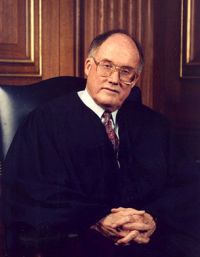
Portrait of William Rehnquist William Rehnquist United States v. Sokolow — Opinion of the Court

The Court of Appeals classified evidence of traveling under an alias, or evidence that the suspect took an evasive or erratic path through an airport, as meeting the test for showing "ongoing criminal activity." But certainly instances are conceivable in which traveling under an alias would not reflect ongoing criminal activity: for example, a person who wished to travel to a hospital or clinic for an operation and wished to concealed that fact. One taking an evasive path through an airport might be seeking to avoid a confrontation with an angry acquaintance or with a creditor.
Source: Wikisource

Portrait of William Rehnquist William Rehnquist United States v. Sokolow — Opinion of the Court

We do not agree with respondent that our analysis is somehow changed by the agents' belief that his behavior was consistent with one of the DEA's "drug courier profiles." [6] Brief for Respondent 14-21. A court sitting to determine the existence of reasonable suspicion must require the agent to articulate the factors leading to that conclusion, but the fact that these factors may be set forth in a "profile" does not somehow detract from their evidentiary significance as seen by a trained agent.
Source: Wikisource

Portrait of William Rehnquist William Rehnquist United States v. Sokolow — Opinion of the Court

A divided panel of the United States Court of Appeals for the Ninth Circuit held that the DEA agents did not have a reasonable suspicion to stop respondent, as required by the Fourth Amendment. 831 F.2d 1413 (CA9 1987) . We take the contrary view.
This case involves a typical attempt to smuggle drugs through one of the Nation's airports. [1] On a Sunday in July 1984, respondent went to the United Airlines ticket counter at Honolulu Airport, where he purchased two round-trip tickets for a flight to Miami leaving later that day.
Source: Wikisource

Get perspective with Kwize: daily news enlightened by great literature