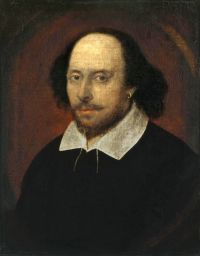
William Shakespeare

William Shakespeare

Summary

Portrait of William Shakespeare William Shakespeare The Warwick Shakespeare (''c''. 1908)

No one knows better than the arch-conspirator, Cassius, that the assassination is very difficult to justify, and that most of those who take part in it are not actuated by a spirit of abstract justice; that the cause is not good enough to depend for success on strenuous moral conviction. Now had every man engaged in the conspiracy been as Brutus was—unmoved by personal resentments and jealousies, and wholly convinced that the act was right—the movement would have been attended by that moral force which would have carried public feeling irresistibly along with it.
Source: Wikisource

Portrait of William Shakespeare William Shakespeare The Warwick Shakespeare (''c''. 1908)

Thoughts of great value, worthy cogitations. ⁠50
Tell me, good Brutus, can you see your face?
Bru. No, Cassius; for the eye sees not itself,
But by reflection, by some other things.
Cas. 'T is just:
And it is very much lamented, Brutus,
That you have no such mirrors as will turn
Your hidden worthiness into your eye,
That you might see your shadow.⁠I have heard,
Where many of the best respect in Rome,
Except immortal Cæsar, speaking of Brutus ⁠60
And groaning underneath this age's yoke,
Have wish'd that noble Brutus had his eyes.
Source: Wikisource

Portrait of William Shakespeare William Shakespeare The Warwick Shakespeare (''c''. 1908)

When his personal feelings are stirred and his affections warmly engaged he is ready to face any danger or difficulty; but he has no sense of moral obligation whatever.
Octavius is his foil—as cold and calm and stubborn as Antony is fiery and impulsive; as remorseless, as unscrupulous, as unflinching—we feel here, as we feel with treble force in Antony and Cleopatra, that he is resistless, unvanquishable, the chosen instrument of Fate that will not be denied.
Source: Wikisource

Get perspective with Kwize: daily news enlightened by great literature