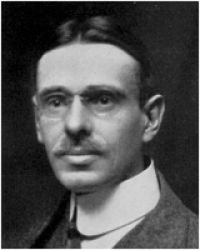
William Tyler Olcott

William Tyler Olcott

Summary

Portrait of William Tyler Olcott William Tyler Olcott Star Lore Of All Ages — Aquila… (1911)

Here over the face of the waters as it were, just above the region of the sky known to the ancients as "the Sea," we find three birds in flight, two eagles and a swan, our Lyra, being anciently known as "the Falling Eagle." There is a significance in this arrangement that has never been satisfactorily explained. Dupuis advanced the idea that the famous three Stymphalian Birds of mythology were represented by the constellations Aquila, Cygnus, and Lyra, grouped near Hercules, whose fifth labour it was to slay them.
Source: Wikisource

Portrait of William Tyler Olcott William Tyler Olcott Star Lore Of All Ages — Aquila… (1911)

The Hebrews know this constellation as "Neshr," an eagle, falcon, or vulture. The Arabians called it "Al-'Okāb," probably their black eagle. Grotius and Bayer both called the constellation " Altair," the name now borne by its brightest star.
The Turks called Aquila the "Hunting Eagle," and through all the ages it has been known as a bird of prey, the "Eagle of the Winds," the "Soaring Eagle," as contrasted with Vega near by, the "Swooping or Falling Eagle."
Source: Wikisource

Get perspective with Kwize: daily news enlightened by great literature